



Janet Sawyer MBE BEM, is the visionary founder and Managing Director of LittlePod, an award-winning South West company established in 2010. Her mission is to champion real vanilla, an ingredient threatened by the widespread use of artificial alternatives. Janet developed an innovative natural vanilla paste in a tube, making real vanilla more accessible and affordable, and launched LittlePod’s “Campaign for Real Vanilla” to educate consumers and support farming communities in equatorial regions. LittlePod has also pioneered a polyculture orchard in Bali, Indonesia, contributing significantly to rainforest regeneration and biodiversity.
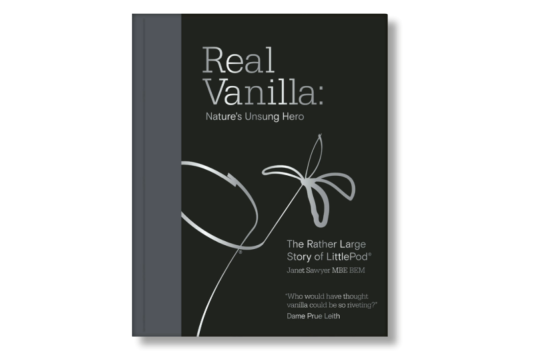
Her exceptional work has been widely recognised, with Janet receiving a British Empire Medal (BEM) in 2012 and a Member of the Order of the British Empire (MBE) in 2020, for her contributions to culture, employment, international trade, sustainability, and exports. LittlePod has also been honoured with prestigious accolades including the Queen’s Award for Enterprise in 2018 and the King’s Award for Enterprise in 2023, both in the Sustainable Development category. Janet is also the author of “Real Vanilla: Nature’s Unsung Hero: The Rather Large Story of LittlePod,” a new book chronicling her company’s 15-year journey and mission.
I must say, I absolutely loved chatting with Janet! She had such incredibly insightful and detailed answers to all my questions that I often found myself struggling to choose just the best bits for the write-up. Honestly, I could easily have doubled the length of this interview with all the wonderful stories and extended explanations she shared.
 What does your Monday morning routine look like?
My Monday morning is all about the team meeting, which lasts about an hour. We’ll discuss all sorts of things, from what’s going on that day, to preparations for the week and months ahead. Harriet, who has been with me since the beginning in 2010, made Double Vanilla Biscuits from the Vanilla cookbook I wrote in 2014, for the meeting today.
What did you want to be when you were young?
I actually wrote about this in my new book because people keep asking me how I got into vanilla. It’s quite unusual for someone in her later years to change professions! When I was young, I wanted to become a primary school teacher. It wasn’t a straightforward journey for me, but it was my number one passion, and I think I’m still doing that today by educating people about real vanilla.
What was your first full-time job?
Teaching wasn’t actually my first full-time job. That’s why I said it wasn’t a straightforward journey for me. I left school after A-levels and worked in a bank. My mother thought it was the ultimate nice, respectable job, so that was how I got started. I suppose that training gave me the organisational skills that I use in LittlePod. I left the bank and, in those days for young people, it was all about getting married, so I got engaged and followed my partner to Hull where he was training as an architect and I got a job as a trainee statistician with the British Trawlers Federation. It was a really interesting time because it was during the second Cod War and towards the end I was witnessing the downfall of the fishing industry in the country. Now, when I look back and reflect on that, I think it was a very important time in history and very relevant to what is happening today.
 What can’t you live without?
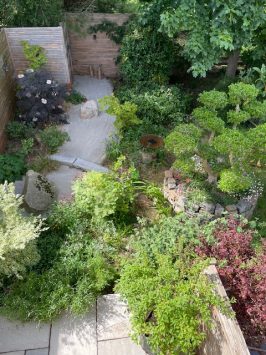
My family are number one, obviously, and I’ve got a gorgeous little grandson now as well. But in terms of my daily life and the way I live it, I can’t do without a garden! When I came back from Japan during Covid, I had my office at home – it’s where I wrote the book, actually – and I could look out onto my own project: a Japanese Garden which I designed myself. When I first went to London in the 70s, I found it really overwhelming. I used to cycle all over London and then I found this little independent garden that had been going for over 300 years. It’s called the Chelsea Physic Garden. A lot of people know about it now, but they just don’t know how special and important it is. All the botanicals are registered there before they go to Kew. I’ve always been a friend of the Chelsea Physic Garden, but about four or five years ago, they asked me to be a patron. I feel so privileged to be a part of it.
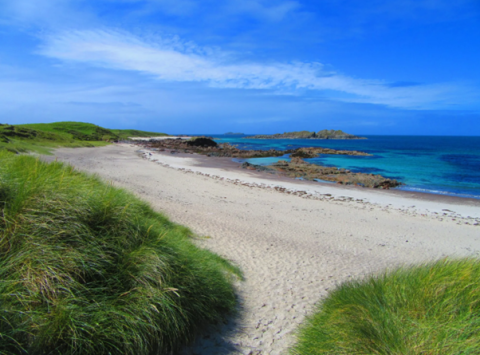 If you could build a house anywhere in the world, where would it be?
If I truly didn’t want to engage with society and wanted the ultimate getaway, a bolt-hole, I would build an eco-friendly house on the Isle of Iona. It’s my most special place. I went there for both my pregnancies and afterwards. You get a little ferry ride from Mull, see the Golden Eagles and the seals bobbing alongside. A lot of people go there for the Abbey and the nunnery and the white stones of Iona, which is very special, but if you go over to the West side of the island, which is pretty uninhabited, you can see something called the Machair habitat. It’s little sorts of Alpine-type flowers in every colour and hue. The white sand, the green hills going down to the white sand out into the blue sea, and all along, as far as you can see, this bed of little wildflowers. Yellow and pink and blue… Can you imagine a house there? I wouldn’t be able to get permission for that, of course, but if you had your dream eco-dwelling there, wouldn’t it be fab?
What has been the best moment in your career?
The one thing I loved about being a primary school teacher was that heuristic moment when the penny drops in a child’s eyes and you know they’ve got it. And not only that they’ve got it, but that feeling that they’ve got it and that feeling will never leave them. That feeling that’s going to make them curious learners for ever and ever. That is fantastic!

The other thing is when I went to the garden party at Buckingham Palace when I was awarded the BEM for my contribution to a not-for-profit Community Arts group, the Farringdon Society of Arts. The FSA group is where LittlePod grew from because I had held an event at the village hall called Vanilla, Spice and All Things Nice. I invited a friend from university days to talk about vanilla and the vanilla farmers and how they scratched a living producing vanilla and it inspired me. It was a total shock to receive the BEM, and then in 2020 I was awarded the MBE for my contribution to International Trade, Sustainability and Exports.
It was during COVID, so this time the palace wasn’t open and no way of presenting the award. They gave me three options. One option was that the Lord Lieutenant of Devon could present it. One option was that I could wait and the Queen could present it later, or the third option was that I would be given three tickets to go to the garden party at Buckingham Palace. When I got the BEM, I took my son to the garden party because you could take one guest. He’s a doctor and at the time he was in his third year and had just discovered something in the labs, and I thought he was far more worthy than me. To go to the garden party for the MBE I had the opportunity to take my husband and daughter and baby bump, so that is such a special thing. Through my work and efforts, I was able to take all of my family to the Garden Party at Buckingham Palace!
What has been the worst moment in your career?
A friend of mine, we’d been friends for 51 years, died last year, and when we were asked to write something for the funeral, my son wrote something which I thought was just wonderful. “There are bad people in the world who have good thoughts and there are good people in the world who have bad thoughts, and Clare [this friend] was one of those good people who only had good thoughts“. You do have to remember that you can’t judge a book by its cover. I’m 71 now and I’ve seen a bit, and sometimes you’re disappointed, and sometimes, you know, the bad people with the good thoughts win the day.
The lows have been when things haven’t really worked out the way I thought they would. You have to roll with the punches. There was someone who worked with LittlePod, not quite in the inner sanctum, but they were there. They did something quite dreadful that could have resulted in the end of LittlePod, and that was very disappointing. When my daughter was about nine, she came home from school one day with this tape and she put it on immediately and said: “Mummy, this is you!” And there was this song “I get knocked down, but I get up again, You’re never gonna keep me down” (by Chumbawamba). I couldn’t believe she had noticed anything like that happening.
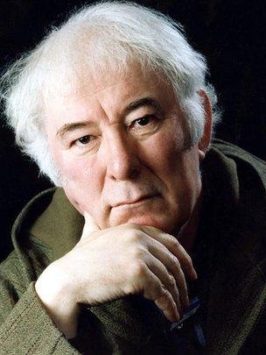 If you could invite any two people for dinner, who would they be and why would you invite them?
When I was doing A-level English, we had to write a story about the lost four years of Shakespeare’s life, and I wrote about what I thought he did. I said he would definitely have read Don Quixote by Miguel Cervantes and that he would have gone in search of Cervantes to meet his hero. People don’t believe I did this, but I went in search of Seamus Heaney, the Irish poet and the Nobel Laureate. I wrote to him to ask if I could put on his translation of the Greek tragedy, The Burial at Thebes, in my village. He wrote back and gave me permission! I asked the Arts Council to give me some money to put the play on, but they wrote back to say who was going to want to come and see a Greek tragedy? I thought it was very short-sighted. In the end, 400 people came, and we were invited to perform at the Great Hall in Dartington. It was a huge success! So Seamus I’ve actually met, but there are three people that I’m thinking of now.
The second is Leo Tolstoy! Anna Karenina is my all-time favourite book. I can imagine sitting down and talking with him about the whole world history of that time. And then for modern times, I would want to talk to Nelson Mandela. I’d want to know the reality of it all. I remember that day when he was released. I had a young student teacher with me, and the two of us took a picnic down to the river and toasted his release. Obviously, there are lots of other people that I’d like to spend a day with on an individual level, but if I had the chance to spend a day with people of that magnitude, I’d love it!
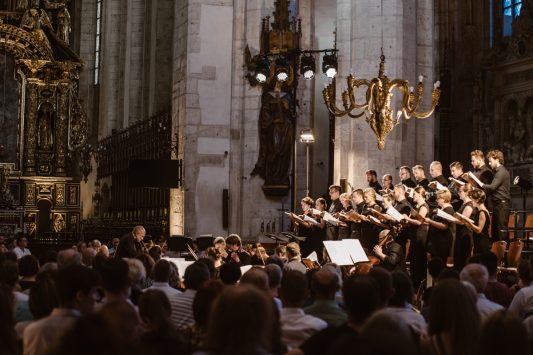 What’s a hidden talent or skill that most people don’t know you possess?
This is something that happened to me and I’d never do it again, but after I put on The Burial at Thebes and it went so well, I wrote to Seamus Heaney and told him I was going to Krakow in Poland for a singing holiday! Everyone de-stresses in different ways, and I used to go to singing classes, and I learned and am still learning, to play the piano. When I arrived in Krakow the day before the holiday started, I saw this great big poster and it said: Choral Encounter: England with Capella Cracoviensis and the State Orchestra, and I thought how fantastic it would be to go to that. The next day I turned up for my first rehearsal for the singing holiday.
We had been asked to learn Mozart’s Requiem. That was what we were going to be singing that week in these rather beautiful buildings, and then this young German conductor turned up and said we were going to learn it in High German and that we were going to perform it with the Capella! Can you imagine? I was so shocked and through an interpreter told him afterwards that I’ve never done anything like this and I’m not a singer. He just looked me in the eye and said, “You are here. This is your challenge.” I took it and I didn’t sleep. This was my holiday, but I was up all night long learning the words and the music.
 What is your most memorable foodie childhood memory?
My parents were Irish, but my father deserted the Irish Army during the war to join the RAF, and because of that he lived in exile because he would have been court-martialled if he went back. I remember a recipe from my childhood, which is in my Vanilla Cookbook. It was a kind of Irish poor man’s vanilla panna cotta. When I was ill or feeling off, my mother would make it for me. Vanilla Panna Cotta with figs. There’s nothing more restorative. She also made soda bread every morning. I’d wake up every day with the smell of freshly baked soda bread.
Name one thing on your bucket list that you still need to do.
My father always said to me when I was little, “Janet, always have a goal, always make it achievable and always go for it. And when you’ve got it, replace it with something else.” I’ve just launched my new book, where I had the chance to give a voice to many significant people. It’s a coffee table book, non-fiction, and it can be difficult to introduce characters to something like that. I’ve done that through utilising interviews with these people. It was first launched in Berlin in May and now it has launched in England at an event at Darts Farm. I suppose if I want to achieve something significant, I would now take LittlePod from a campaigning company to a company where people recognise the brand. It would be huge and would be a team effort.
I do have more goals, personal goals that I want to achieve, too. I’d love to get much better at the piano. I run an art society in the village, and I’d love to do some artwork of my own.
Share a quote or motto that inspires you or by which you live your life.
We have a motto in LittlePod. It’s not written on the wall, but it’s there for everyone who comes to LittlePod to understand. In this rush-rush society, a lot of people say to me, “Janet, you’ve been going for 15 years, why isn’t LittlePod a known brand? Why isn’t it making a massive turnover?” I think it’s because I’ve grown it organically because of my motto for living in the 21st century: “Slow things down to get things done.” I listened to an interview with a chap from the Harvard Business School. They did a project where they looked at 180 very successful large companies around the world and it showed that if you have the courage to slow things down and not scale too quickly, and get things done properly, you’re more likely to survive. This is important for people starting their own company. Don’t forget a significant percentage of new companies don’t last to year 5, so for us to have survived for 15 years is big.
 If you were a superhero, what would your superpower be and why?
If I were a superhero, my superpower would be farsightedness. A former intern and a dear friend pointed out that I seem to have a knack for seeing things before others. It allows me to anticipate challenges and opportunities. This isn’t just about business; it’s an understanding that comes from life’s experiences. It enables me to grasp things quickly. This foresight has been central to LittlePod’s journey, especially in our long-term commitment to regenerating rainforests through sustainable vanilla cultivation. My passion lies in demonstrating how supporting real vanilla – the only edible fruit from an orchid – directly aids biodiversity and benefits indigenous farmers, contrasting sharply with artificial vanillin. This vision, which we’ve been pursuing for 13 years, has ultimately led to a King’s Award for its alignment with UN sustainability goals. It proves that the ‘slow things down to get things done’ approach to polyculture can really make a difference for the planet and its people.
 What’s the best piece of advice you ever received?
The best piece of advice I’ve ever received came during an incredibly dark and stressful time in my life, after my father’s sudden passing. A wise man, a poet himself, quoted a poem to me that I’ve never forgotten, and it’s given me strength ever since: “I tell thee naught for thy comfort/ Yea, naught for thy desire / Save that the seas grow darker yet and the tides grow higher / And night shall be thrice night over you and heaven an iron cope / Yea, do you have joy without a cause? Nay, faith, without a hope.” That verse, from G.K. Chesterton’s ‘The Ballad of the White Horse’, instilled a profound resilience in me. Someone pointed out to me once that I’m always happy, and he thought the happiest people often have endured the most tragic times. I think there is some truth in that because you have to get your resilience from somewhere. I would really encourage young people, certainly my grandson, to read a bit of poetry!
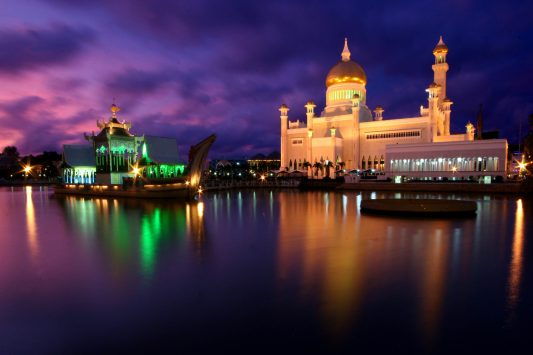
What’s the most adventurous thing you’ve ever done?
I’ve written about quite a few of my adventures in my new book, but one that I didn’t mention was this one that happened back in 2000, just before 9/11. I was flying back from Indonesia, completely out of money, as I spent my last money thinking that I just had a short layover in Brunei and then I’d be home. I only discovered at 1.00am when I landed in Brunei that the layover was three days because it was a special discount flight. There I was, in the pitch black, with no cash, no mobile phone, and nobody willing to help. Eventually, a supervisor called me into his office. It was like ‘Waiting for Godot’. White walls, one table, two chairs on either side, and he told me to sit down. It felt like it was going to be an interrogation. He told me to put my hand under the table and slipped me a piece of paper with his phone number, telling me a car was waiting outside to take me to a hotel, and if I needed him in the next three days to call him, but at the same time making it clear, ‘I haven’t done this!’ I had to decide right there, in that utterly bizarre situation, whether to trust him and get into an unmarked car with a stranger. I decided to throw caution to the wind, and what followed was a three-day adventure that truly changed my life and would easily fill another book!
 What is happening in your life that you would like a shout-out about?
I’m going to shout about my new book, Real Vanilla: Nature’s Unsung Hero – The Rather Large Story of LittlePod. I’m very proud of it and of the fact that Dame Prue Leith has given me the strapline for my front cover: “Who would have thought that vanilla could be so riveting?” There are a few more on the back cover from some wonderful people and one in particular from Sue Medway MBE, who is the Director of the Chelsea Physic Garden: “A journey into the flavour of sustainability. This is horticulture with heart.”
Real Vanilla: Nature’s Unsung Hero was published in the UK on the 10th of June and launched at Darts Farm during a book launch and vanilla-themed dinner on the 2nd of July. Published by Unicorn, Janet’s new book is available from UK bookshops, Amazon and UK retailers worldwide, and can also be purchased from LittlePod’s online shop. You can connect with Janet through her LinkedIn page.