



A major new report launched today shows how the sleeping giant that is geothermal energy could revolutionise how food, drink and farming access a genuinely sustainable source of electrical generation and heat in Cornwall. The study evaluates how businesses in Cornwall and the Isles of Scilly could use deep or shallow geothermal to cut costs and improve resilience and long-term sustainability.
The report, by Great Cornish Food, says Cornwall’s agrifood industry is worth £2 billion a year and provides 20 per cent of jobs but faces mounting energy costs, grid constraints and urgent decarbonisation targets. It says geothermal energy – which comes from the heat beneath the earth’s surface – is uniquely positioned to address this, offering stable, local, renewable energy with proven technology and operational examples already established.
Geologically the far South West is perfectly placed to exploit underground “hot rocks” as it sits on a 250-km long body of granite, known as the Cornubian Batholith, stretching from the Isles of Scilly through Cornwall to Dartmoor in Devon.
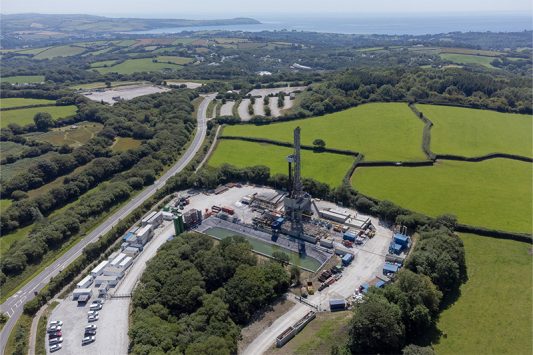
Established deep drilling projects such as Eden Geothermal at the Eden Project and Geothermal Engineering at United Downs and, at a shallower depth, the ground source heating programme Heat the Streets at Stithians are among those showing geothermal’s potential.
The study says that consultations with businesses, developers, public sector bodies, and stakeholders revealed strong demand for reliable, low-carbon heat and cooling. It found that key locations in the county are suited to cluster and anchor-load models – where multiple users share geothermal infrastructure.
These are especially attractive for reducing individual risk to businesses and enabling broader adaption similar to installations around the world where geothermal and agrifood collaborations have exploited the technology and delivered healthy returns on investment.
The models also align with regional goals for net zero by 2045, local food security, and rural economic development.
Launching the report today, Great Cornish Food Managing Director Richard Bain said that the study can be a valuable guide for other parts of the country beyond the far South West.
He said: “The agrifood sector is the beating heart of Cornish manufacturing, providing great products to Cornwall, the rest of the country, and beyond. But we urgently need to build resilience by establishing a step change in stable, renewable and clean sources of energy. With the United Downs wells now generating and exporting electricity to the grid and several study sites in Cornwall proving viability for electrical generation, the agrifood sector should be genuinely excited at the prospect of utilising this extensive heat source.”
Richard added: “The report details how shallow geothermal for smaller direct heat applications can harness the ‘hot rock’ energy and identifies how the different applications can match the wide range of temperatures and capacity used in food processing. We just can’t ignore this energy that will provide heat and power round the clock, whatever the weather or the season due to Cornwall’s special geology. Let’s wake the sleeping giant!”
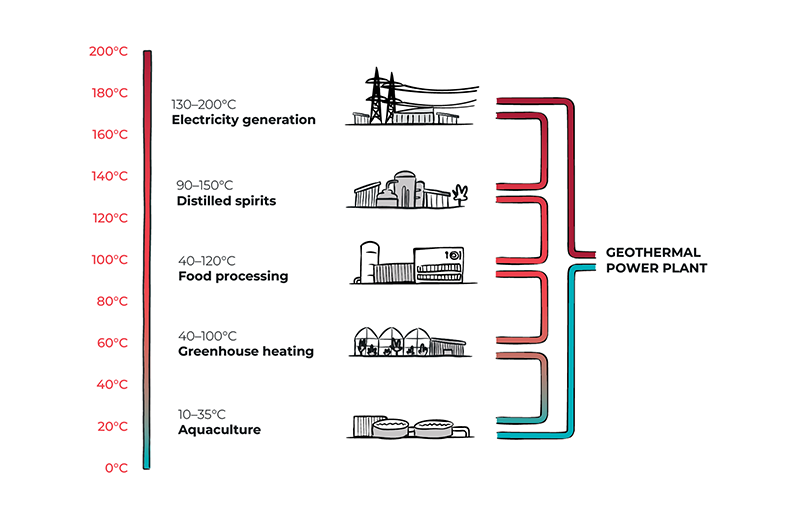
The report sets out a bold programme to accelerate the use of geothermal energy across the agrifood sector, calling for early‑stage feasibility work, targeted funding support and streamlined planning pathways to unlock new low‑carbon heat projects.
It highlights the opportunity for cluster‑based and shared‑infrastructure models to reduce risk for businesses, while urging local authorities to safeguard key geothermal resource areas within future planning frameworks.
The report also recommends expanding demonstration sites and practical guidance to help agrifood businesses adopt geothermal solutions, positioning the technology as a catalyst for growth, resilience and year‑round production across the UK’s food system.
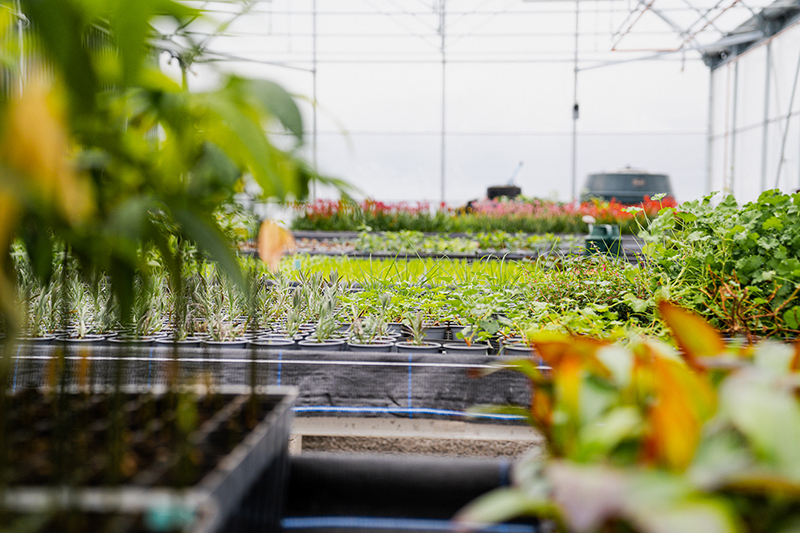
It says that the project at United Downs demonstrates the technical feasibility of producing both renewable electricity and heat at scale, while the Eden Project scheme provides heat for the plant biomes, buildings and greenhouses.
The new study is part of Truro-Based Great Cornish Food’s Raising the Bar Programme, part-funded by the UK Shared Prosperity Fund. The full report can be read here: greatcornishfood.co.uk/content/uploads/2026/03/Agrifood-EGL-Report.pdf
A key aim is to build upon the 2024 Cornwall and Isles of Scilly Agrifood Strategy in which geothermal energy was identified as an opportunity for agrifood businesses in Cornwall to decarbonise their process energy needs.
The report is intended to help a variety of different audiences, including food businesses, energy providers, local authorities, public-sector bodies, funders and finance organisations. Accompanying it is a concise guide developed by Eden Geothermal on behalf of Great Cornish Food, designed to inform the agrifood sector about geothermal and its practical application. The guide offers businesses useful first steps and sources of information to start their journeys to developing geothermal projects themselves.
Visit greatcornishfood.co.uk for more details.
(Main image: Drilling at the Eden Geothermal site. ©Toby Smith 2021).