

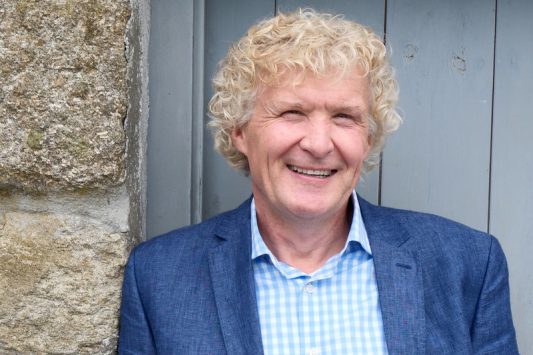
Few food brands are as closely woven into the fabric of Cornwall as Rodda’s. Founded in 1890 and now led by fifth-generation family member Nicholas Rodda, the business has grown from a local creamery into an internationally recognised ambassador for Cornish food and drink, while remaining firmly rooted in the values and traditions that built its reputation. From delivering cream around Cornwall as a young man to overseeing exports across the globe, Nicholas has spent a lifetime helping shape the family business.
When we sat down for a chat, it quickly became clear that while Rodda’s has evolved dramatically over the past 135 years, Nicholas remains just as passionate about quality, farming and people as the generations that came before him. We talked about childhood foodie memories, leadership lessons, cottage cheese, cream tasting for breakfast, and why Antarctica is top of his travel wish list.
What does your Monday morning routine look like?
Monday mornings start much like every other morning at Rodda’s. I get into the office, catch up on emails and look at how the week is shaping up, but one of the highlights comes around 8.30am when we do our daily tasting session.
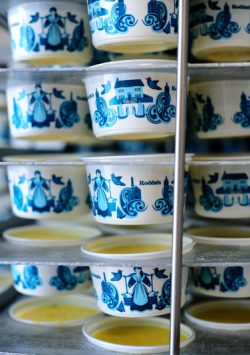
We bring samples of our clotted cream, butter, milk and other products into the office and assess them for consistency, flavour, colour and texture. On clotted cream we’re looking at everything from the goldness of the crust on the cream, to the texture and thickness of the cream as the milk naturally changes throughout the year altering the cream consistency . We’ll look at whether we need to make small adjustments to maintain the consistency people expect from Rodda’s. On butter we are looking rich colour and quality, on reflection I think we should do a toast test….maybe I’ll introduce that!
At the moment we’re also tasting and evaluating samples of our new cottage cheese as it goes through production trials, so that’s now becoming part of the morning panel as well. It’s incredibly important to me that if we make something, we’re genuinely happy with the quality before it leaves the creamery. We also get the chance to try some of our seasonal products throughout the year, which is always a nice perk. Around Christmas, for example, we’ll be tasting our flavoured clotted creams, including varieties such as brandy, maple syrup, lemon and vanilla. They bring a completely different occasion to the product and it’s always exciting to see how people enjoy using them. Having 20 or 30 pots of clotted cream sitting on my desk first thing in the morning is not a bad way to start the day. It certainly puts a smile on your face.
What did you want to be when you were young?
Like a lot of young boys, I went through a phase of wanting to join the RAF. We used to go to local air shows and I loved the idea of flying aeroplanes, travelling around the world and seeing things from a completely different perspective. If you’d asked me when I was about 11 years old, I’d probably have told you I wanted to be a pilot. Beyond that, I honestly didn’t have a fixed plan. I was fairly open-minded about what I wanted to do, but flying definitely captured my imagination.
What was your first full-time job?
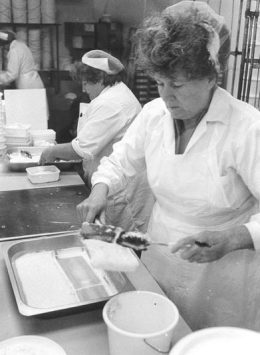
My first proper full-time role came almost by accident. I was working in the creamery over the summer before heading off to university, helping on one of the production lines that packed our small airline portions of classic cream. One of our local delivery drivers had an accident and suddenly somebody needed to cover the route. I stepped in and began delivering products to shops, cafés and hotels around Cornwall, particularly around Land’s End, Sennen and Mousehole.
What was supposed to be a temporary job quickly became something I really enjoyed. I started earning some money, got used to having it in my pocket, and decided I’d save for a couple of years before going to university instead. The plan was to leave later, but I never quite escaped. Before I knew it, I was fully immersed in the business and building a career here.
The role itself was a fantastic introduction to business. I had to manage stock, look after customers, collect payments and effectively run my own little operation. It taught me how to sell, how to build relationships, how to understand different people and even how to have those slightly awkward conversations about unpaid invoices. Looking back, it was a real baptism of fire, but it gave me an incredible grounding and taught me life skills that I’ve carried with me ever since.
What has been the best moment in your career?
There have been a lot of great moments, but one that really stands out was creating our direct milk supply pool in 2016. Before that, we bought milk through a cooperative, but we wanted to develop closer and more meaningful relationships with local farmers. We set out to create our own supply network and signed up around 45 Cornish farming families.
I’m incredibly proud of that achievement because it represented a huge vote of confidence in Rodda’s. Those farmers placed their trust in us and committed to building something together over the long term. When we finally got everybody signed up, we had a small celebration and welcomed them on board. Looking back now and seeing the relationships we’ve built over the last decade makes that moment particularly special.
What has been the worst moment in your career?
One of the most challenging moments was when the first COVID lockdown was announced. At the time, so much of our business supplied hotels, restaurants and cafés. Suddenly those sectors were being told to close and nobody knew how long the disruption would last. At the same time, milk was still arriving from farms every day and we still had products to make.
I remember thinking we were entering completely uncharted territory. There wasn’t a handbook to follow. What got us through was involving the whole team. We communicated constantly, listened carefully and stayed flexible. If an idea worked, we carried on. If it didn’t, we adapted. The reassuring part was seeing everybody pull together. It wasn’t one person making all the decisions. We worked through it collectively and came out stronger for it.
 What is your most memorable foodie childhood memory?
I probably have two that have stayed with me over the years. My mum did a lot of baking when I was growing up, and so did my gran. Gran used to make these little coconut buns filled with jam, and I can still remember going next door to her house when they were fresh out of the oven. I wasn’t even tall enough to see properly over the top of the kitchen table, but I remember the smell drifting through the house and knowing exactly what she’d been making. They’d still be warm from the oven and, as a small boy, they felt like the greatest treat in the world. That’s a memory that’s always stayed with me.
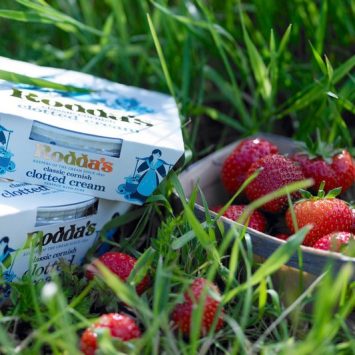
The other one is the arrival of the first Cornish strawberries each year. We used to deliver clotted cream to local strawberry farms and, in return, boxes of strawberries would often find their way back to the creamery. I can still remember Dad coming home with the first strawberries of the season and the excitement that came with it. Back then they were more likely to be grown outdoors, so they arrived a little later than they often do today, and it felt like a real sign that summer had arrived.
It wasn’t just about the strawberries themselves, it was the sense of a new season beginning. There was something special about seeing those first berries appear, knowing warmer days were ahead and, of course, enjoying them with plenty of Cornish clotted cream. Looking back, that’s probably one of my earliest foodie memories and one that still makes me smile today.
What’s the most unexpected lesson you’ve learned from your career so far?
I think that would be tolerance. Over the years I’ve learned that everyone has strengths and weaknesses. When you’re younger, it’s easy to focus on what people don’t do well, but experience teaches you to focus on the positives and bring out the best in people. Nobody is perfect. If you replaced one person with another, you’d simply get a different set of strengths and weaknesses. The important thing is learning how to work with people, recognising their good qualities and helping them thrive.
What is the weirdest thing you’ve ever eaten?
I once attended a trade show where a chef served baked goat’s cheese topped with a locust and drizzled with honey. The goat’s cheese itself was lovely, and I could understand the honey, but adding the locust was definitely unusual. It wasn’t a combination I was expecting and probably not one I’d rush to try again.
If you could time travel and have dinner with any historical figure, who would it be and why?
Mother Teresa would be high on the list. I’d love the opportunity to understand how she maintained such compassion, humility and kindness in what must have been incredibly difficult circumstances. There’s a lot to learn from somebody who dedicated their life to helping others.
I’d also be fascinated to meet Neil Armstrong. To be the first person to stand on the moon and look back at Earth must have been a remarkable experience. I’d love to understand what was going through his mind and hear his perspective on seeing our planet from that viewpoint for the first time.
If you could swap lives with someone for a day, who would it be and why?
I think I’d choose the Prime Minister. Not because I’d necessarily want the job permanently, but I’d be fascinated to understand what it’s really like. Running a country means balancing domestic issues, international relations, financial decisions and countless competing priorities. It would be interesting to see behind the scenes, understand the challenges they face and appreciate the complexity of the role. One day would probably be enough, though.
What is your all-time favourite movie, and why?
I’m afraid I’m not much help with this one. I spend most of my time working and don’t watch many films or much television.
If you could visit any place in the world right now, where would you go?
Antarctica. It looks like one of the last truly untouched places on Earth. I’d love to experience the wildlife, the landscapes and the sense of remoteness. The journey itself appeals to me as well. Crossing the Drake Passage, seeing enormous icebergs, experiencing the raw power of nature and standing somewhere so different from anywhere else on the planet would be extraordinary.
 What is your go-to pleasure snack or comfort food?
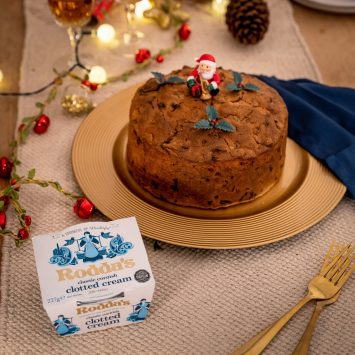
Blueberries. They’re probably my favourite snack. If I’ve had a difficult day, I’m quite happy reaching for a bowl of blueberries. That said, around Christmas, a slice of homemade Christmas cake with marzipan and a cup of tea is hard to beat. That combination can restore your faith in humanity remarkably quickly.
What’s the best piece of advice you ever received?
My grandfather gave me a piece of advice that has stayed with me throughout my career. He said, “Your name’s on the side of the pot, so you’d better make the very best cream you can.” At its heart, that advice is about accountability. Whatever you’re doing, put your name to work you’re proud of. Do the best job you possibly can because ultimately you’re responsible for the outcome.
What inspires you?
What inspires me most is creating value for the people around us — our employees, our farmers and the wider Cornish food and drink sector. We’re fortunate to produce an iconic Cornish product and I want to continue helping it reach new audiences. Rodda’s already exports to places such as Japan, Hong Kong and Dubai, but there’s still a huge world out there.
I sometimes think about Eliza Jane Rodda starting the business 135 years ago and delivering cream as far as a horse and cart could travel. Today we’re sending clotted cream around the world. That’s a powerful reminder of what’s possible, and it motivates me to keep pushing forward.
 What is happening in your life right now that you would like a shout out about?
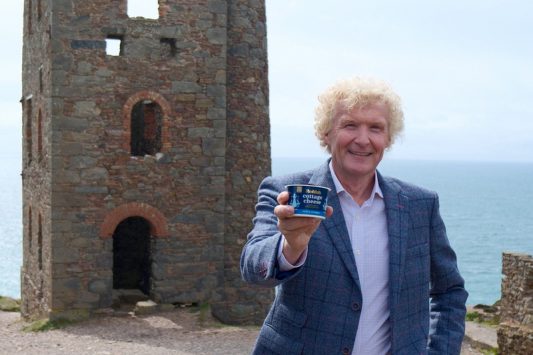
The big focus for me right now is the launch of our new cottage cheese range. Historically, we’ve produced skimmed milk as a by-product of making clotted cream and sold it on for use elsewhere. Cottage cheese allows us to add value to that ingredient here in Cornwall and create something entirely new for the business. We’ve gone from an initial idea to building a dedicated facility, installing specialist equipment and running production trials. Seeing the first tubs getting ready for launch is incredibly exciting.
Alongside that, I’m also thinking about the future of Rodda’s as a family business. As the fifth generation, part of my responsibility is making sure we create the right foundations for the sixth and seventh generations to take the business forward. That’s a challenge I take very seriously and one that’s just as important as any new product launch.
Contact Nicholas through his LinkedIn profile and find out more about Rodda’s through their website.
All images credited to Rodda’s.